
This post may include affiliate links. If you choose to shop through them, I may earn a small commission — which simply supports the work behind this space. Every piece shared reflects the layered, neutral design philosophy I believe in.
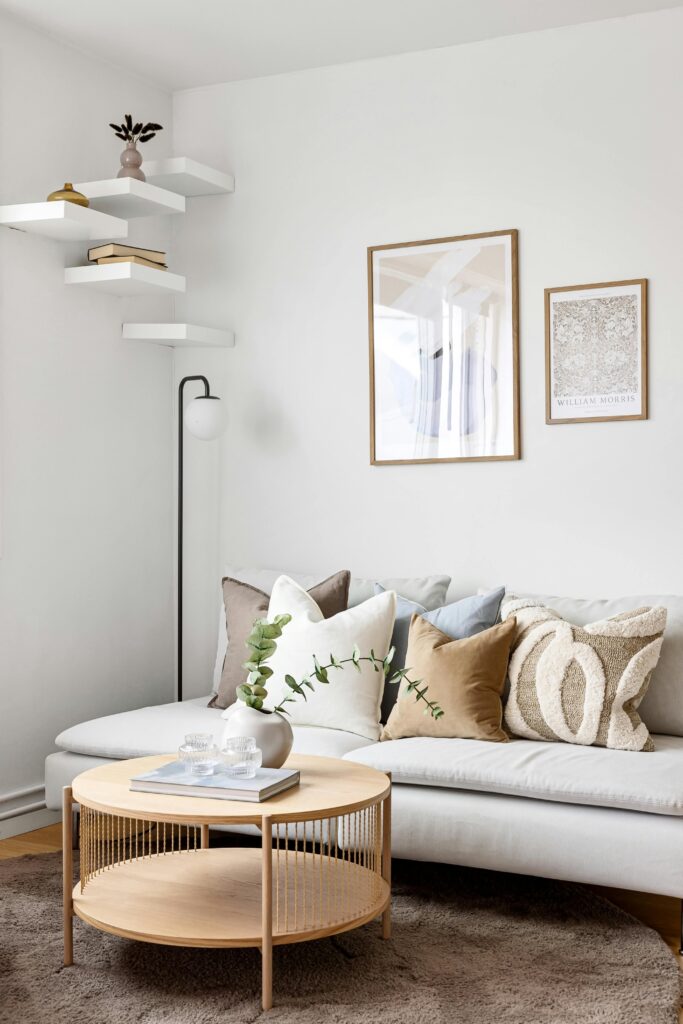
There’s a quiet confidence in a neutral living room done well.
It isn’t loud. It isn’t trying to prove anything. It feels composed — layered through material, light, and thoughtful restraint. Warm wood. Soft upholstery. Space to breathe.
A calm and curated space isn’t about removing personality. It’s about refining it. Editing down to what feels intentional. Choosing pieces that hold weight instead of filling corners out of habit.
If you’re drawn to rooms that feel grounded, elevated, and quietly inviting, these neutral living room ideas explore how to create that balance with purpose.
Neutral living rooms work because they create a sense of balance — grounding you gently and welcoming you into a space that feels calm and steady.
1. Layered Neutral Living Room with Round Wood Coffee Table
The Look
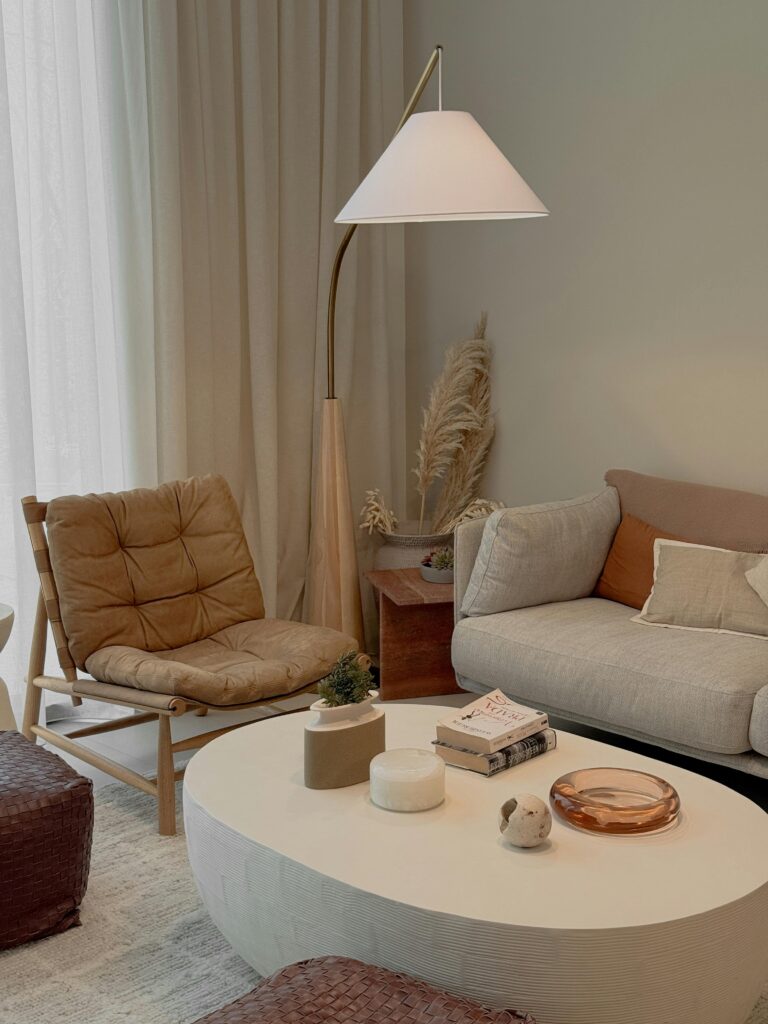
A grounded neutral sofa sits against a palette of soft beige and oat tones. At the center, a round wood coffee table introduces warmth and subtle movement. The room feels composed — layered without excess.
The Approach
Start with proportion. If your sofa is structured and linear, balance it with a curved coffee table to soften the geometry. Choose wood that shows its grain — warmth should feel inherent, not applied. When styling the surface, think in tiers: something low and wide, something stacked, something organic. Then stop. A curated surface is edited, not filled.
The Impact
The curve relaxes the visual structure of the room. The wood grounds the neutrality so it doesn’t drift into flatness. The overall effect feels steady, intentional, and easy to live with.
The Finishing Touch
Extend the layering downward with a generously scaled textured rug. Even in minimalist spaces, that foundation adds depth and quiet luxury.
2. Sunlit Neutral Living Room with Indoor Greenery
The Look
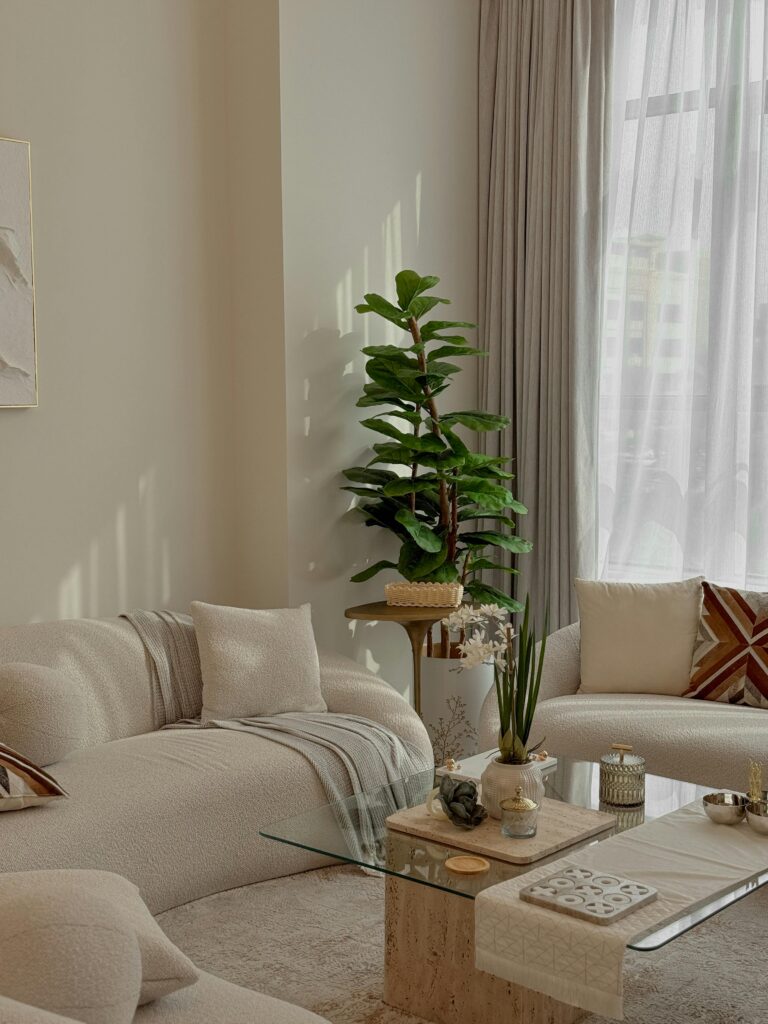
Natural light washes gently across neutral upholstery. A single indoor plant rises from the corner, adding softness without distraction. The space feels open, but not empty.
The Approach
Let light be the dominant design element. Arrange seating so daylight moves across surfaces rather than hitting them harshly. Choose sheer or lightly woven curtains to diffuse instead of block. Introduce greenery deliberately — one taller plant creates more composure than multiple small accents. Keep surrounding decor minimal so the vertical line feels purposeful.
The Impact
Light prevents neutrality from feeling heavy. Greenery introduces life without visual noise. Together, they create a room that feels calm, breathable, and quietly refined.
The Finishing Touch
Add subtle uplighting behind the plant in the evening. It creates dimension after sunset and keeps the room curated at every hour.
3. Layered Neutral Living Room with Floor-to-Ceiling Curtains
The Look
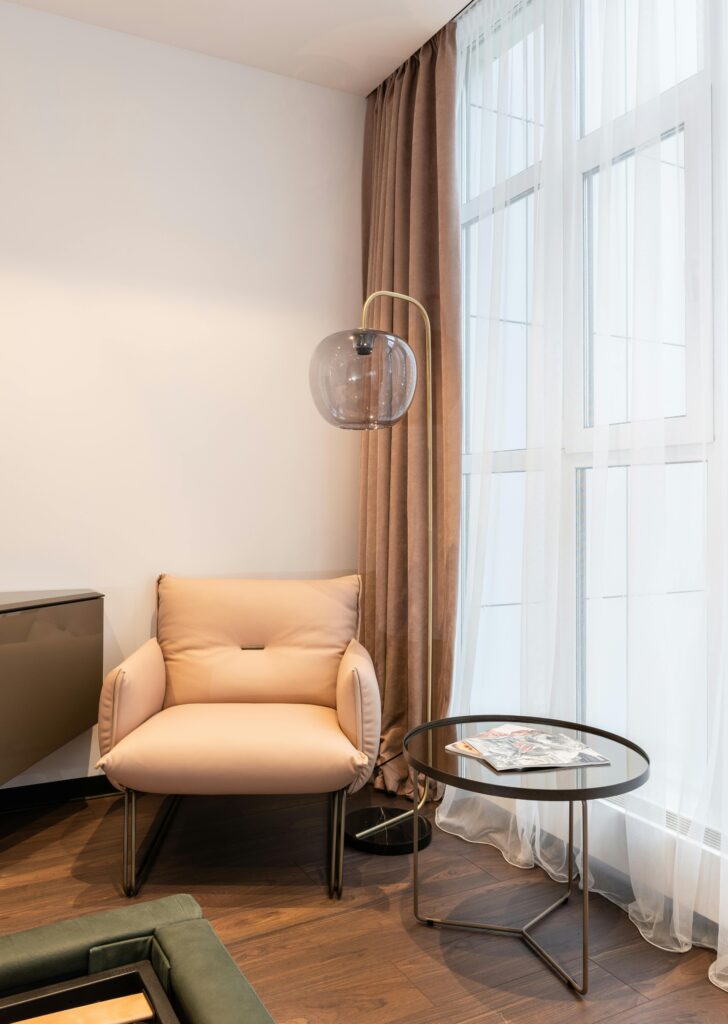
Full-length curtains frame the room vertically, creating softness from ceiling to floor. Beneath them, a structured chair and tall lamp give the corner weight. The layers feel thoughtful rather than decorative.
The Approach
Mount curtain rods close to the ceiling line to elongate the architecture. Allow panels to extend beyond the width of the window so the wall feels broader and more composed. Pair the vertical drapery with something grounded — an upholstered chair, a substantial lamp, a low table. The balance between height and weight is what makes the layering feel intentional.
The Impact
Height adds refinement. Layered lighting ensures the room holds warmth once daylight fades. The space reads elevated, not styled for effect.
The Finishing Touch
Introduce an oversized floor mirror tucked slightly behind the curtain line. It amplifies light and reinforces the vertical rhythm without adding clutter.
4. Neutral Living Room Sideboard Styling with Warm Accents
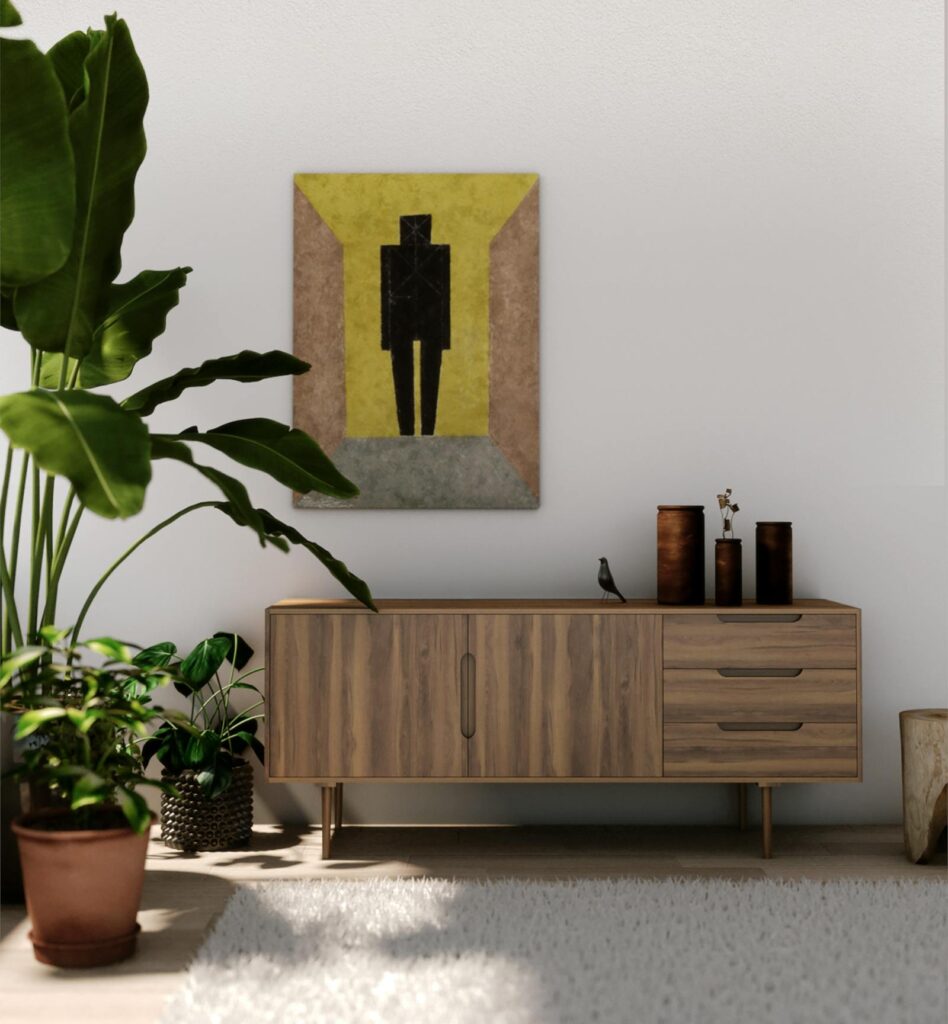
The Look
A low sideboard anchors the wall, styled with restrained decor and layered artwork above. Nothing feels crowded. The accents feel placed, not scattered.
The Approach
Treat the sideboard as a composition, not a storage surface. Start with one larger anchor piece — often framed art, leaning rather than hung. Layer a secondary object slightly in front to create depth. Add one organic element, like greenery, to soften the structure. Keep height varied but intentional. The goal is balance, not symmetry.
The Impact
When styled with restraint, a sideboard becomes architectural. It grounds the wall and prevents open space from feeling unfinished. Emotionally, it signals order and intention. Functionally, it provides quiet storage without adding visual weight.
The Finishing Touch
Add subtle picture lighting above the artwork. That single detail shifts the styling from decorative to editorial.
5. Neutral Living Room Decor with Curated Accents
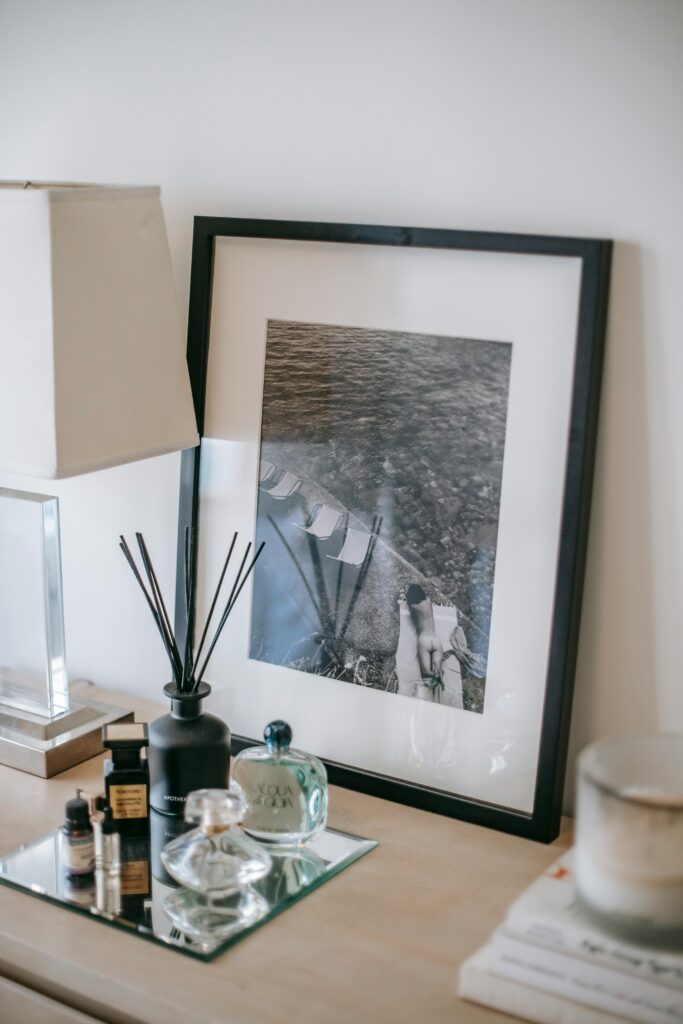
The Look
Layered frames, soft ceramics, and restrained objects create a vignette that feels thoughtful rather than filled. The tones stay closely related — cream, sand, muted wood.
The Approach
Curated accents require editing. Choose fewer pieces than you think you need. Work in odd-numbered groupings for visual ease. Mix materials — matte ceramic against wood, linen against glass — but keep the color palette tightly controlled. Leave breathing room around each object so the vignette reads intentional, not assembled.
The Impact
A curated arrangement feels composed. It reduces visual distraction and elevates everyday objects into design elements. The space feels refined because nothing is competing for attention.
The Finishing Touch
Introduce one unexpected scale shift — an oversized bowl or slightly larger frame — to create quiet tension within the arrangement.
6. Neutral Living Room with Modern Wall Art Contrast
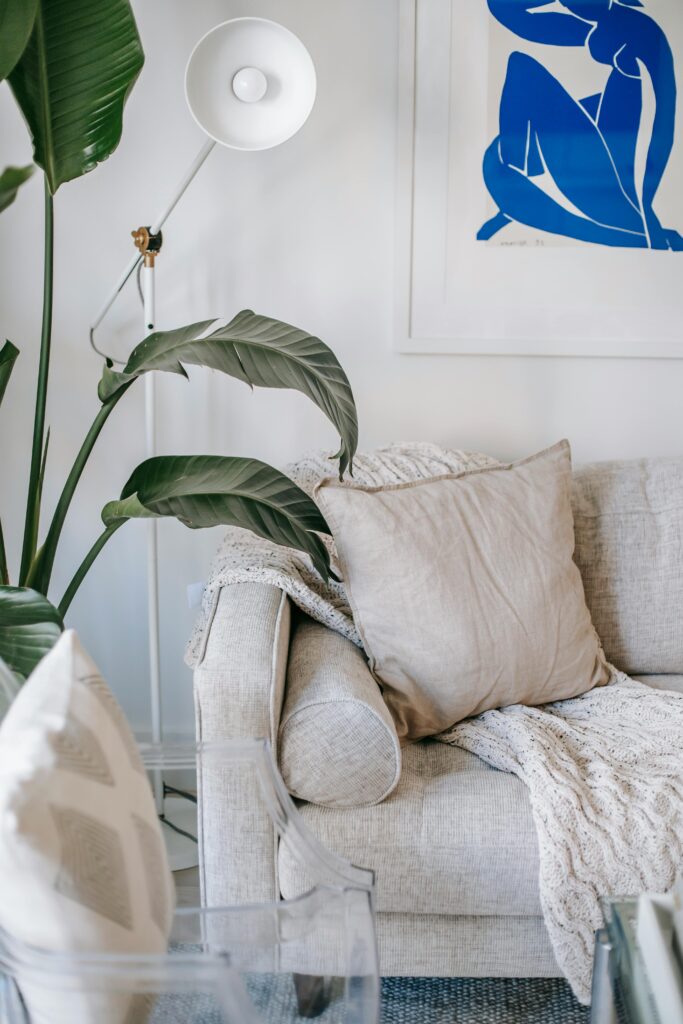
The Look
A textured armchair sits beneath modern artwork that introduces subtle contrast. The room remains neutral, but there’s depth and edge.
The Approach
Contrast doesn’t have to mean color explosion. It can mean scale or mood. Choose artwork that introduces movement or bold brushwork while staying within a restrained palette. Position it at eye level when seated, not standing. Let the art anchor the wall while furniture below stays quieter and textural.
The Impact
Art introduces personality without disrupting calm. It prevents a neutral living room from feeling predictable. The space feels curated — expressive, but controlled.
The Finishing Touch
Layer in a textured rug with a whisper of the artwork’s undertone woven in. That subtle repetition anchors the wall and makes the contrast feel deliberate.
7. Warm Neutral Living Room with Fireplace Detail
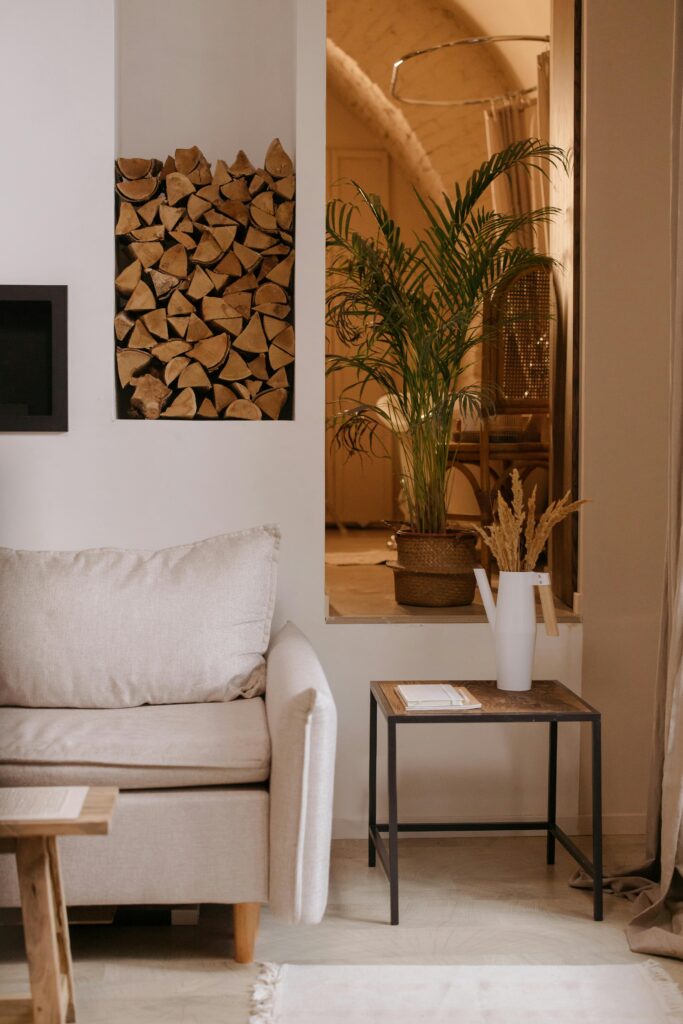
The Look
A neutral sofa sits near a fireplace framed by natural wood. The warmth feels built in, not added. The room feels settled — like it has history.
The Approach
Treat the fireplace as a grounding element, not just a focal point. Keep styling around it restrained so the architectural detail carries the weight. If you don’t have a fireplace, create that same grounded warmth intentionally. A simple basket of decorative birch logs or stacked wood accents can introduce the same feeling of natural structure without needing the architecture. Layer seating nearby to create proximity. Fireplaces invite gathering; your layout should respond.
The Impact
Repeating material builds cohesion. Fireplace elements — real or implied — create intentional grounding. Emotionally, the room feels anchored and warm. Functionally, the layout encourages conversation and comfort.
The Finishing Touch
Introduce one deeper neutral — a slightly richer wood, a charcoal-toned object, or a woven texture — to ground the warmth and keep it from feeling washed out.
8. Soft Neutral Living Room with Sheer Curtains
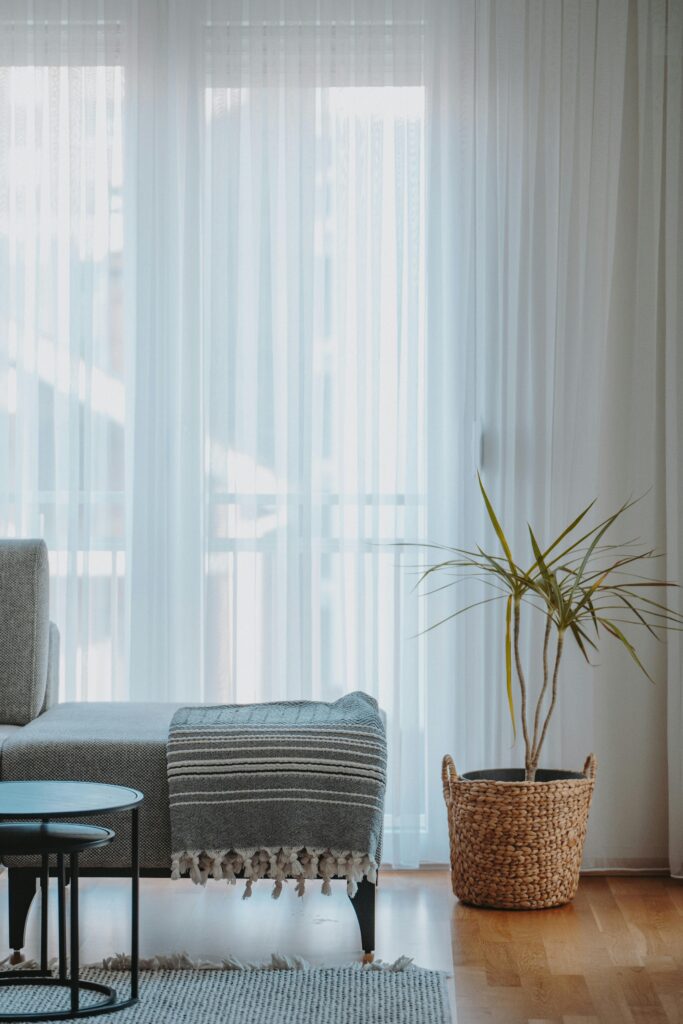
The Look
Light filters through sheer panels, softening the edges of the room. Upholstery, wood, and woven textures feel calm and composed rather than stark.
The Approach
Let the curtains establish mood, not just function. Sheers work best when the rest of the room carries quiet weight. If the upper half feels airy, introduce weight below — a substantial rug, a solid wood table, or woven texture at floor level. Avoid sharp contrast in this kind of space. Instead, build variation through material and proportion. Think balance, not decoration.
The Impact
Filtered light reduces visual tension. Grounded materials prevent the space from feeling unfinished. Together, they create calm that feels intentional rather than accidental.
The Finishing Touch
Layer a second curtain panel in the same tonal family, slightly heavier than the sheer. The subtle depth gives the window presence without disrupting the softness.
9. Neutral Living Room with Open Shelf Styling
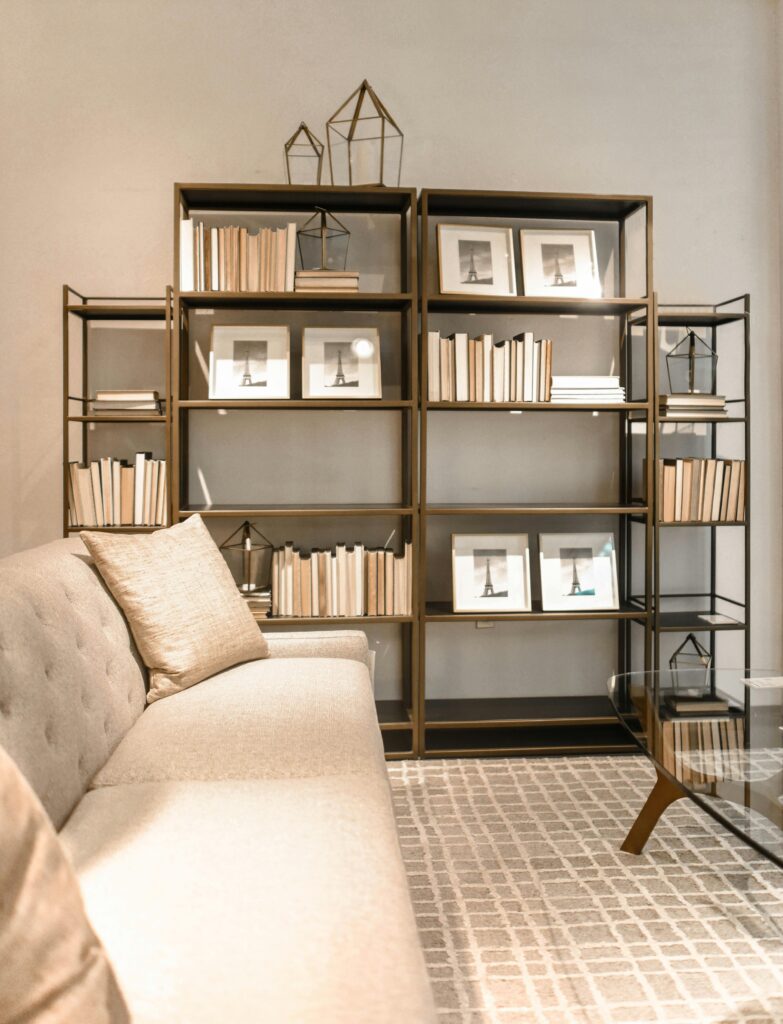
The Look
Open shelving styled in warm neutrals — books stacked horizontally and vertically, ceramics spaced intentionally, negative space left untouched. Nothing feels accidental.
The Approach
Style shelves in zones rather than item by item. Anchor each section with something substantial — a stack of books or a larger object — then layer smaller pieces beside it. Vary height and depth, but keep undertones consistent so the eye moves smoothly across the wall. Most importantly, leave empty space. A curated shelf always has room to breathe.
The Impact
Open shelving can feel chaotic without structure. When styled intentionally, it becomes architectural — adding rhythm and balance to the room. Emotionally, it signals clarity. Practically, it prevents visual clutter from building over time.
The Finishing Touch
Edit one object out after you think you’re finished. The restraint is what makes the styling feel composed instead of full.
10. Calm Neutral Living Room with Oversized Abstract Wall Art
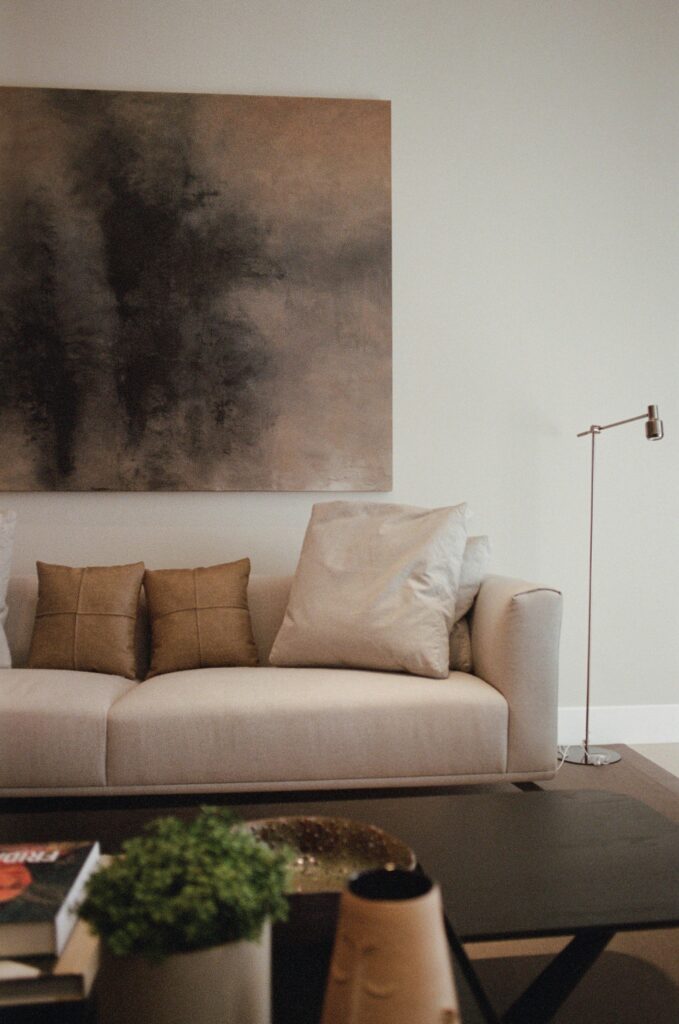
The Look
An oversized abstract piece anchors the wall, creating presence without noise. The seating beneath it remains understated, allowing the artwork to lead quietly.
The Approach
When choosing abstract art in a neutral living room, prioritize scale over complexity. A larger piece with controlled movement feels more intentional than several smaller frames competing for attention. Keep the palette restrained — contrast can come from brushstroke energy or negative space rather than color intensity. Position the artwork so it visually centers the seating arrangement, not the wall.
The Impact
Scale introduces confidence. The room feels curated because the art holds its ground. Emotionally, the space feels composed rather than busy. Functionally, a single focal piece simplifies the room’s visual hierarchy.
The Finishing Touch
Allow at least six to eight inches of breathing room around the artwork. That negative space gives it quiet authority.
11. Layered Neutral Sofa and Coffee Table Styling
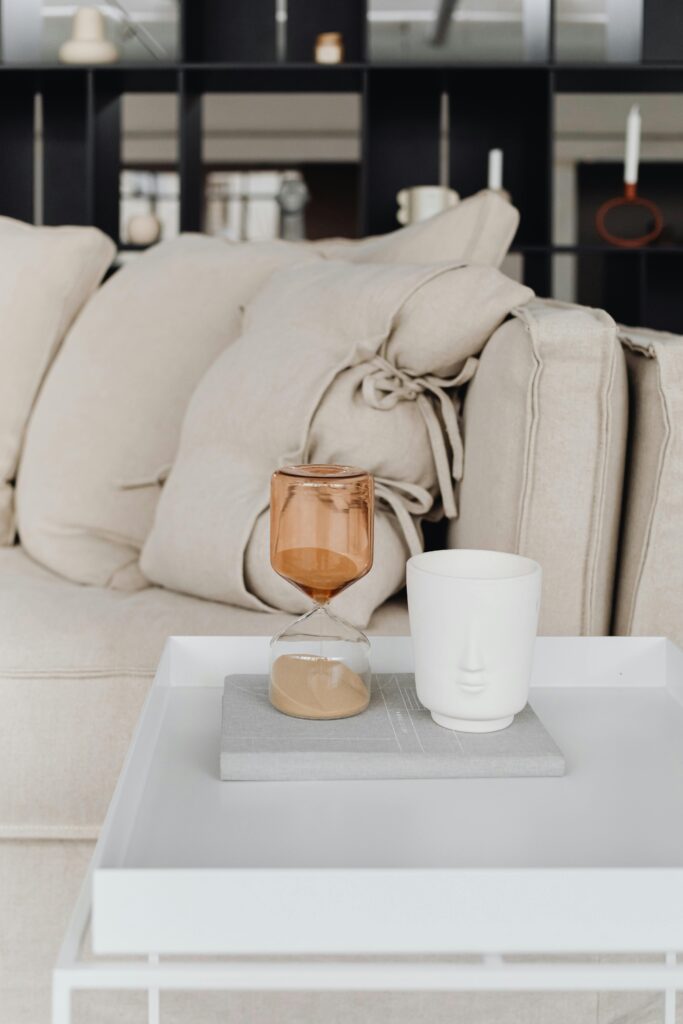
The Look
Soft neutral pillows rest against structured upholstery while the coffee table carries a composed arrangement. The room feels settled and lived-in without appearing casual.
The Approach
Layer pillows in varied textures rather than varied colors. Keep them within one tonal family, adjusting depth through fabric — linen, boucle, subtle weave. On the coffee table, build one intentional cluster rather than scattering small objects. A stack, a vessel, a natural element. Leave part of the surface clear. Curated means controlled.
The Impact
Textural layering adds warmth without visual clutter. The sofa feels inviting but refined. The table styling creates rhythm without distraction. The space reads thoughtful rather than decorative.
The Finishing Touch
Shift one pillow slightly forward instead of lining them up perfectly. That small imperfection softens the structure and adds quiet ease.
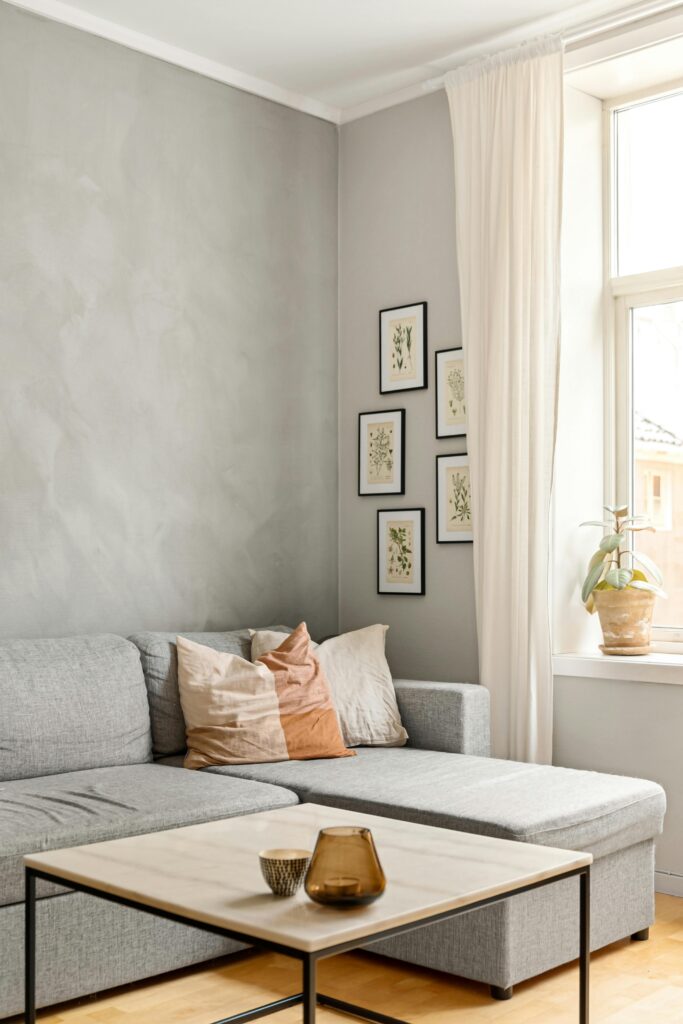
12. Elevated Neutral Living Room with Gallery Wall and Sectional
The Look
A sectional anchors the room while a restrained gallery wall introduces subtle rhythm. The arrangement feels balanced rather than busy.
The Approach
When styling a gallery wall in a neutral space, think composition first. Lay out frames on the floor before committing. Keep spacing consistent and tones cohesive. Allow one larger piece to anchor the arrangement so the grouping feels unified. With a sectional, ensure the gallery wall doesn’t extend beyond the visual width of the sofa — alignment matters.
The Impact
Structured repetition creates calm. The gallery wall adds personality without overwhelming the room. The sectional feels grounded and proportionate.
The Finishing Touch
Mix one frame in a slightly warmer wood tone to prevent the arrangement from feeling flat.
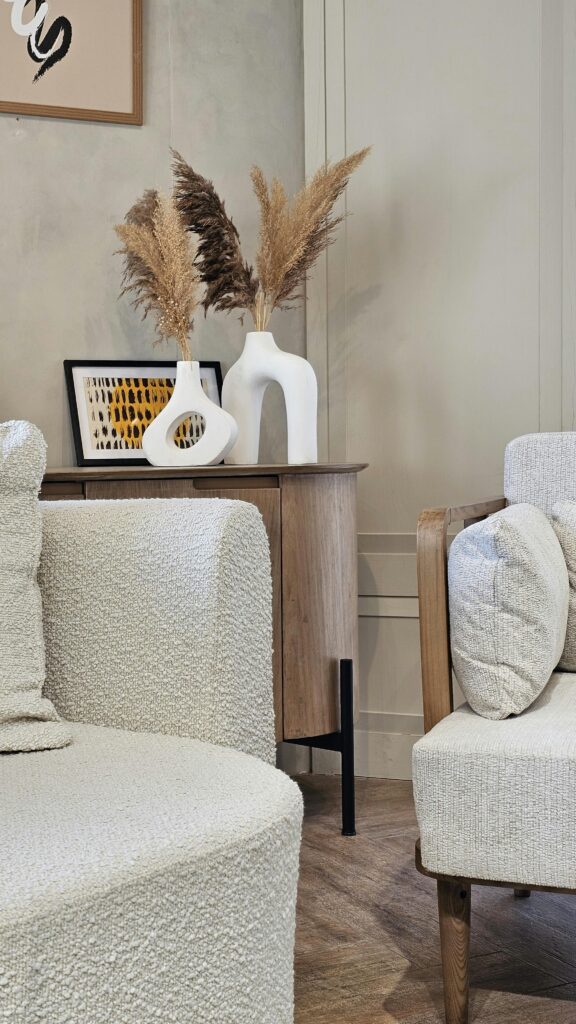
13. Minimal Neutral Sofa with Pampas Accents
The Look
A minimal neutral sofa sits against a soft palette while pampas grass introduces height and texture. The styling feels light but intentional.
The Approach
Keep the sofa simple and let texture carry the dimension. Pampas works best when treated as architecture rather than decor — choose taller stems and allow them to create vertical movement. Avoid over-layering pillows here; restraint enhances the softness. Let negative space frame the arrangement.
The Impact
Vertical organic elements add quiet drama without disrupting calm. The room feels elevated but not styled for effect. The neutrality feels purposeful rather than sparse.
The Finishing Touch
Use a sculptural vase with weight at the base. That grounding detail prevents the height of the pampas from feeling top-heavy.
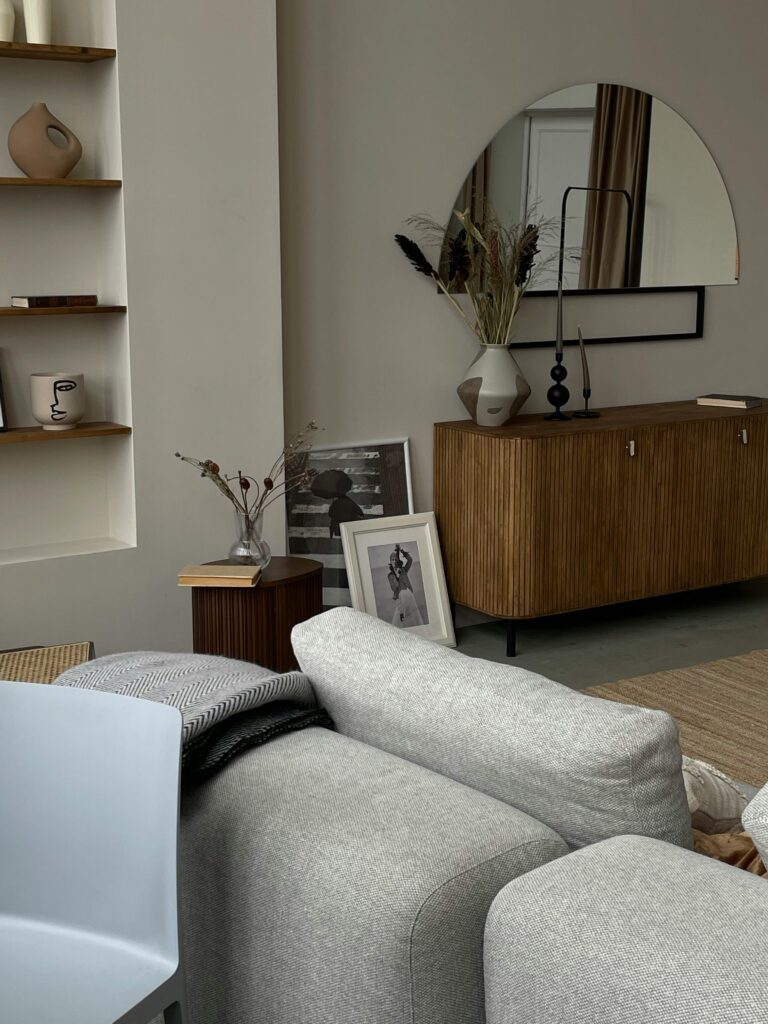
14. Balanced Neutral Living Room with Console Table Styling
The Look
A console table sits quietly against the wall, anchored by a round mirror and restrained accents. The arrangement feels balanced without feeling symmetrical.
The Approach
When styling a console in a neutral living room, think in layers of height. Start with a large circular or rectangular mirror to create structure. In front of it, stagger objects — a lamp for vertical weight, a smaller vessel for softness, one organic element for movement. Keep the palette tonal so the composition reads cohesive rather than decorative. Avoid pushing everything to the back edge. Bring one piece slightly forward to create depth.
The Impact
A well-composed console grounds transitional walls and prevents them from feeling empty. It adds rhythm without clutter. Emotionally, it creates a sense of order the moment you enter the room.
The Finishing Touch
Add one piece with subtle contrast — a darker base, a matte finish, or a slightly richer undertone — to anchor the entire vignette.
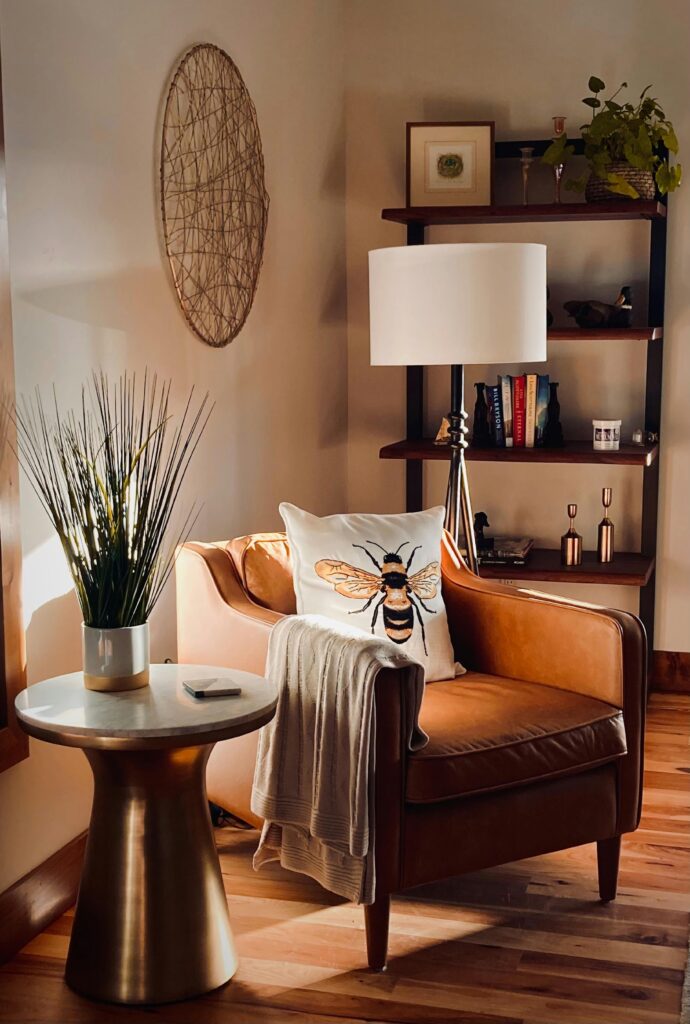
15. Warm Neutral Living Room with Ambient Lighting
The Look
A softly lit corner with a structured chair, a simple side table, and shelving layered behind. The warmth feels intentional, not dim. The space reads intimate without feeling small.
The Approach
Design at least one corner of your living room for evening — not for daylight, but for dusk. Start with a chair that feels grounded, then layer in a small table and a lamp at seated height. Let shelving or wall elements sit quietly behind it to add depth. Lighting should graze surfaces rather than flood them. The goal isn’t brightness — it’s atmosphere.
Think of the corner as a retreat within the room.
The Impact
Ambient lighting shifts a neutral space from minimal to inviting. Layered elements create depth so the corner doesn’t feel flat once the sun sets. Emotionally, it signals rest. Functionally, it creates a defined zone without walls.
The Finishing Touch
Add one textural element that catches low light — woven fibers, brushed ceramic, or subtle wood grain. When light hits texture, the room feels layered rather than shadowed.
The Heart of the Home
When a neutral living room is built with intention, it settles into a rhythm of its own. Materials feel grounded. Light moves softly. Each layer supports the next.
Over time, that steadiness becomes more than aesthetic — it becomes atmosphere. The kind that welcomes conversation, quiet mornings, late evenings, and everything in between. A space that feels composed and refined.
A calm and curated living room holds attention gently, confidently, and with purpose. It becomes the heartbeat of the home — the place everyone naturally gathers, where warmth and ease meet.
Neutral, but never ordinary.